Solar Panel Critter Guard Installation NJ
Solar panels create more than clean energy. The protected space between the panels and your roof can also become an attractive location for squirrels, birds, and other animals looking for shelter.
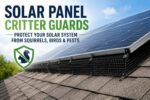
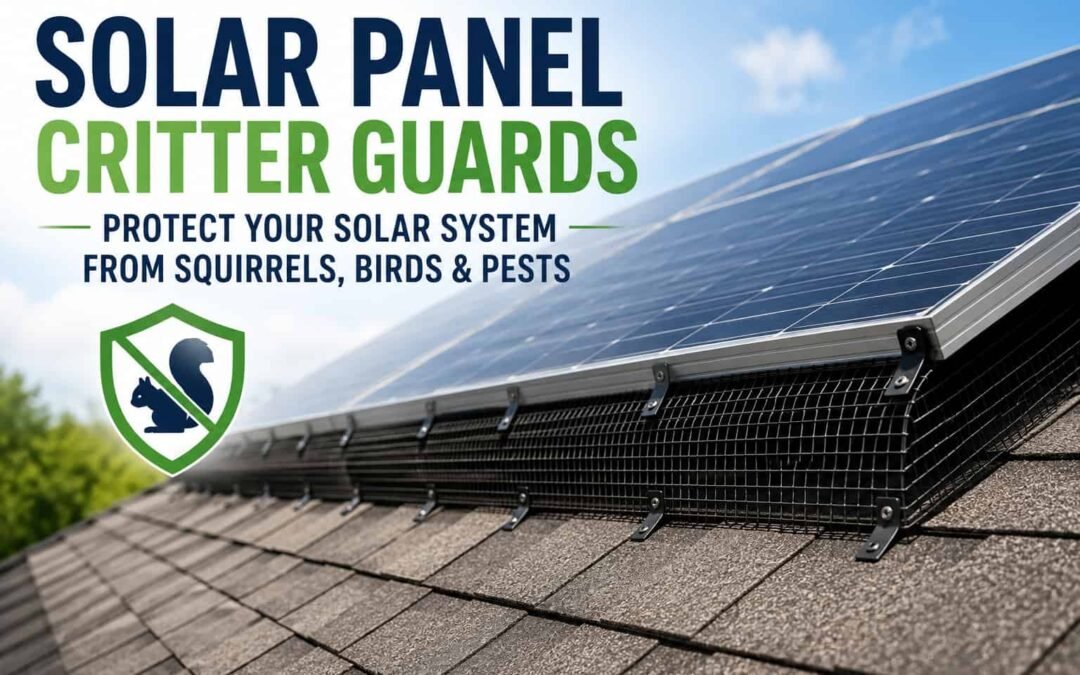
Solar panel critter guards in New Jersey create a physical barrier around the perimeter of a solar array to help prevent animals from getting underneath the panels, where nesting materials, debris, and animal activity can potentially damage wiring and create maintenance problems. The U.S. Department of Energy provides resources on solar technologies and integrated energy systems, supporting the importance of proper solar system management and maintenance.
For New Jersey homeowners, installing solar panel critter guards can be an important preventive-maintenance step—especially when there are already signs of animals around the solar array.
What Is a Solar Panel Critter Guard?
A solar panel critter guard is a protective barrier installed around the exposed perimeter of a rooftop solar array.
It is typically designed to close the gap between the solar panels and roof while still allowing ventilation around the equipment.
The objective is simple:
Keep animals out without interfering with the normal operation of the solar array.
Solar panels themselves don’t necessarily attract squirrels or birds. The problem is the protected environment created underneath them.
For an animal, that space may offer:
- Protection from predators
- Shade during hot weather
- Shelter from rain and snow
- A potential nesting area
- Protection from wind
- A relatively undisturbed location
Once animals begin using that area, however, the consequences can extend beyond an occasional noise on the roof.
Why Are Squirrels a Problem Around Solar Panels?
Squirrels are particularly concerning because they’re persistent climbers and chewers.
Solar installations contain electrical wiring and connections beneath and around the array. Animal activity around those components can potentially result in damaged wiring or other problems requiring professional inspection and repair.
The issue may remain hidden because much of the activity occurs underneath the panels.
A homeowner might not see anything wrong from the driveway.
Instead, the first warning signs could be unusual sounds, visible nesting material, animal activity on the roof, or changes in system performance.
Birds Can Create Problems Too
Squirrels aren’t the only reason to consider solar panel pest protection.
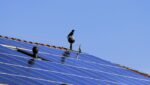
Birds may attempt to nest beneath solar arrays because the panels provide overhead protection.
Over time, nesting activity can introduce:
- Twigs
- Leaves
- Feathers
- Droppings
- Other organic debris
This creates additional maintenance concerns around an electrical system that should remain accessible, ventilated, and properly maintained.
The objective of a critter guard isn’t to harm wildlife. It’s to prevent animals from gaining access to areas where their presence can create problems for both the animals and the solar equipment.
7 Signs You May Need Solar Panel Critter Guards
You don’t necessarily have to climb onto your roof to recognize a potential problem.
Watch for these warning signs:
1. Squirrels Frequently Running Across Your Roof
Seeing an occasional squirrel isn’t unusual in New Jersey.
But if squirrels repeatedly travel across the roof and disappear near the solar array, investigate further.
2. Birds Regularly Entering Beneath the Panels
If birds consistently fly toward the same section of the array and disappear underneath it, nesting activity may already be occurring.
3. Nesting Material Around the Roof or Gutters
Twigs and other debris appearing near the solar array can indicate animal activity.
4. Scratching or Movement Above the Ceiling
Unusual sounds don’t automatically mean animals are underneath your solar panels, but they shouldn’t be ignored.
5. Visible Wiring Damage
If accessible wiring appears damaged, the solar system should be professionally evaluated.
Avoid attempting electrical repairs yourself.
6. Unexplained Solar Performance Problems
A reduction in production can have many causes and doesn’t automatically indicate animal damage.
However, if performance changes occur alongside obvious animal activity, the system deserves closer inspection.
7. Debris Accumulating Beneath the Array
Leaves, branches, nesting material, and other debris underneath the panels may indicate that the area needs cleaning and protection.
Critter Guards Are About Prevention, Not Just Pest Control
This distinction is important.
Homeowners sometimes wait until squirrels have already damaged wiring or birds have established nests before addressing the problem.
A better strategy is preventive.
Think of a critter guard similarly to preventive maintenance on other parts of your home.
You don’t install it because something must fail.
You install it because reducing exposure to a known risk can potentially prevent a much more complicated repair later.
What Happens When Animals Are Already Under the Solar Panels?
This situation requires more care.
Simply installing mesh around the perimeter without first evaluating what’s underneath isn’t necessarily the right approach.
You don’t want to unknowingly trap an animal beneath the array.
A professional evaluation should first determine the condition of the area and whether there is evidence of:
- Active nesting
- Animal intrusion
- Damaged wiring
- Debris accumulation
- Damaged solar components
- Roof problems
- Other maintenance concerns
The appropriate remediation can then be determined before the array is secured.
Solar Critter Guard vs. DIY Wire Mesh
This is another area where homeowners should be careful.
At first glance, critter protection may appear simple:
Buy some mesh and attach it around the panels.
But a rooftop solar installation isn’t an ordinary fence.
The protection system must work around expensive electrical and roofing equipment.
| DIY Approach | Professional Solar Critter Guard |
|---|---|
| Generic mesh may be used | Material selected for solar application |
| Attachment method may be improvised | Designed around the existing array |
| Potential risk of improper attachment | Installed with the solar equipment in mind |
| Existing damage may go unnoticed | System can be evaluated before installation |
| Difficult roof access | Appropriate rooftop procedures can be used |
| No solar diagnosis | Potential problems can be identified for further service |
One particularly important consideration is how the guard is attached.
Improper installation shouldn’t damage panels, frames, roofing materials, wiring, or other solar components.
Should Critter Guards Be Installed When Solar Panels Are First Installed?
Preventive installation can make sense, particularly on properties where squirrels and birds are common.
However, many homeowners purchased their systems without critter protection.
That doesn’t necessarily mean it’s too late.
Existing solar systems can be evaluated to determine whether critter guards can be added and whether cleaning, maintenance, or repairs should be completed first.
A Great Time to Install Critter Guards: Solar Removal and Reinstallation
There’s another opportunity homeowners frequently overlook.
Suppose your roof needs replacement and your solar panels must already be removed and reinstalled.
That can be an excellent time to discuss critter protection.
Solar X can evaluate the array during the removal and reinstallation process and identify whether there is evidence of animal activity, debris, damaged wiring, or other issues that should be addressed before the system returns to service.
Instead of simply putting the panels back exactly as they were, the project becomes an opportunity to improve the long-term protection and maintenance of the solar installation.
Critter Guards Should Not Restrict Proper Ventilation
Solar modules need airflow around them.
That’s one reason critter protection should be designed to block animal access without simply sealing the entire area beneath the array.
Solar panels naturally generate heat during operation, and the mounting system provides separation between the modules and roofing surface.
The goal is therefore:
Block animals—not airflow.
A properly selected solution should account for the configuration of the existing solar installation.
Will a Critter Guard Affect Solar Production?
A properly installed critter guard should be designed to protect the perimeter of the array without shading the active solar cells or interfering with normal system operation.
The bigger performance concern may actually be what happens without protection if animal activity leads to damaged components or maintenance issues.
If the system is already experiencing production problems, however, critter guards shouldn’t be treated as a cure.
Solar production problems should be diagnosed separately.
Solar Monitoring Can Help Identify Hidden Problems
This is where Solar X’s broader solar maintenance capabilities become valuable.
Suppose a homeowner notices squirrels underneath the panels and also sees lower-than-expected production.
Those two events might be related.
They might also be completely unrelated.
Professional troubleshooting can combine information from:
- Solar monitoring
- Inverter performance
- Physical inspection
- Electrical diagnostics
- Drone assessments when appropriate
- Visible animal activity
- System history
That provides a much better basis for diagnosing the problem than simply assuming squirrels caused the production loss.
Solar Critter Guard Installation Checklist
Before installing critter protection, the solar system should be approached methodically.
| Step | What Should Happen | Why It Matters |
|---|---|---|
| 1 | Inspect the solar array | Identify existing conditions |
| 2 | Look for animal activity | Determine whether intrusion already exists |
| 3 | Check for nests and debris | Area may require cleaning |
| 4 | Inspect accessible wiring/components | Identify potential damage |
| 5 | Evaluate the array perimeter | Determine appropriate guard configuration |
| 6 | Install the protective barrier | Restrict future animal access |
| 7 | Verify installation | Ensure the system isn’t obstructed |
| 8 | Monitor the solar system | Watch for future performance issues |
This is why critter guard installation should be considered part of solar system maintenance, not merely pest control.
Critter Guards for Commercial Solar Systems
Animal intrusion isn’t exclusively a residential problem.
Commercial rooftops can contain hundreds or thousands of solar panels, creating large protected areas where birds may congregate or nest.
For commercial solar asset owners, prevention can become part of a broader operations and maintenance strategy that includes:
- Solar inspections
- Drone assessments
- Performance monitoring
- Preventive maintenance
- Electrical troubleshooting
- Array repairs
- Cleaning assessments
- Asset management
- Critter protection
The larger the solar asset, the more important systematic maintenance becomes.
Frequently Asked Questions About Solar Panel Critter Guards
Do solar panels attract squirrels?
The panels themselves aren’t necessarily what attracts squirrels. The protected space underneath a rooftop solar array can provide shelter, making it attractive to animals already living in the surrounding area.
Can squirrels damage solar panel wiring?
Squirrels are known to chew various materials. If animal activity occurs around solar wiring, the system should be inspected for potential damage rather than assuming everything is fine.
Can birds nest underneath solar panels?
Yes. The sheltered space beneath rooftop solar panels can provide an attractive nesting location for birds.
Can I install solar critter guards myself?
Because the work involves roof access and takes place around an electrical solar installation, professional evaluation and installation can reduce the risks associated with improper attachment or overlooked system problems.
Should the area beneath the panels be cleaned first?
If debris or nesting material is present, the condition should be evaluated before installing a perimeter barrier. Active wildlife should also be handled appropriately rather than simply enclosed beneath the array.
Can critter guards be added to existing solar panels?
In many situations, existing systems can be fitted with critter protection. The specific solution depends on the panel layout, mounting system, roof configuration, and current condition of the installation.
Do critter guards require maintenance?
They should be included in periodic visual inspections. Storms, roof work, vegetation, debris, or other conditions can affect rooftop equipment over time.
Protect More Than Your Solar Panels
Your solar system is a long-term investment involving modules, wiring, electronics, mounting hardware, roof penetrations, monitoring equipment, and other components.
Protecting that investment means thinking beyond whether the panels are producing electricity today.
It means asking:
What could compromise this system over the next 5, 10, or 20 years?
Animal intrusion is one of those preventable risks.
Solar panel critter guards can provide an additional layer of protection while professional solar maintenance, monitoring, and periodic inspections help ensure that the entire system continues operating as intended.
Schedule a Solar Critter Guard Assessment With Solar X LLC
If you’ve noticed squirrels, birds, nesting material, debris, or suspicious activity around your solar panels, don’t wait until there’s an obvious system failure.
Solar X LLC can evaluate your solar installation, inspect for potential problems, and determine whether critter guard installation is appropriate for your system.
Solar X also provides solar maintenance, troubleshooting, removal and reinstallation, drone solar assessments, monitoring, repairs, and other residential and commercial solar services throughout New Jersey.
Contact Solar X LLC
Office:
1775 NJ-34 STE B4
Wall Township, NJ 07727
Phone: (732) 992-6323
Email: support@solarxpros.com
Website: solarxpros.com
Protect the space beneath your panels before squirrels, birds, and debris turn a preventable issue into an expensive solar repair.