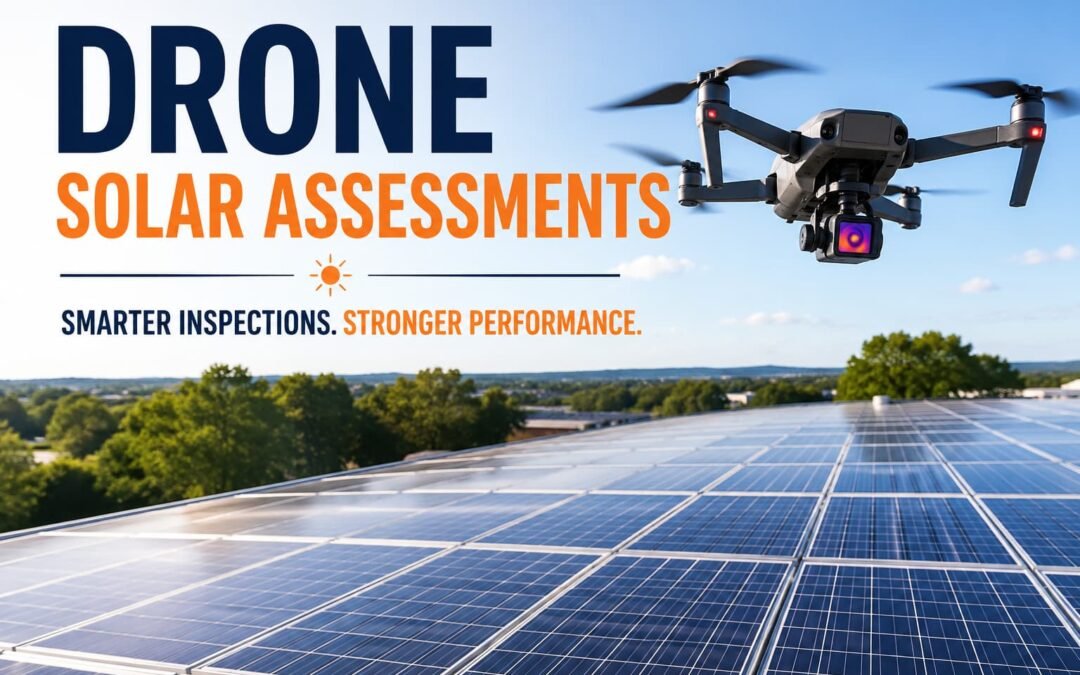
Drone Solar Assessments
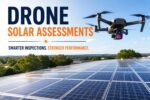
Solar panels may look perfectly normal from the ground while hidden performance problems are developing across the system. Drone solar assessments use aerial imaging—and, when appropriate, thermal infrared technology—to inspect solar arrays efficiently and help identify potential anomalies that deserve closer investigation.
The U.S. Department of Energy provides information on integrated energy systems and energy technologies, supporting the broader role of solar energy in modern energy management and infrastructure.
For homeowners, commercial property owners, solar asset managers, and facility operators, drone solar assessments in New Jersey can provide valuable information about the condition and performance of a solar installation without relying only on a ground-level visual inspection.
At Solar X LLC, drone solar assessments are part of a broader approach to solar operations, maintenance, troubleshooting, and performance management in New Jersey.
What Is a Drone Solar Assessment?
A drone solar assessment is an aerial evaluation of a photovoltaic (PV) system using a drone equipped with specialized imaging equipment.
Depending on the scope of the assessment, the drone may capture:
- High-resolution visual images
- Thermal or infrared images
- Aerial views of individual panels
- Images of entire solar arrays
- Locations of visible damage or abnormalities
- Thermal patterns that may indicate areas requiring further investigation
The goal isn’t simply to take pictures of the solar panels.
The real value comes from collecting useful data that can help technicians identify where potential problems are located and determine what should be investigated next.
Solar X provides drone solar assessments ranging from aerial evaluations to detailed inspections and installation commissioning, helping customers obtain actionable information about their solar assets.
Why Inspect Solar Panels With a Drone?
Traditional solar inspections remain important. However, accessing every module on a large rooftop or commercial solar installation can be time-consuming and difficult.
A drone provides another perspective.
Instead of examining only the panels that are easily accessible, technicians can obtain an aerial overview of the array and identify areas that may require closer attention.
This can be particularly valuable for:
- Large commercial solar arrays
- Industrial facilities
- Flat-roof installations
- Difficult-to-access rooftops
- Multi-building solar portfolios
- Systems experiencing unexplained production problems
- Preventive maintenance programs
- Newly commissioned solar installations
Drone technology can therefore serve as an efficient screening and diagnostic tool within a more comprehensive solar maintenance strategy.
What Can a Drone Solar Assessment Find?
One of the biggest misconceptions about solar maintenance is that a problem will always be visible from the ground.
It won’t.
Solar modules operate as part of an electrical system, and some abnormalities may manifest as differences in temperature or production rather than obvious physical damage.
Depending on the equipment used and inspection conditions, aerial inspection can help identify or locate potential issues such as:
1. Thermal Hot Spots
An infrared camera can reveal areas of a module operating at a different temperature than surrounding cells or modules.
A thermal anomaly doesn’t automatically tell you the root cause. Instead, it identifies an area that may require additional testing.
Possible causes can include module defects, electrical issues, shading, soiling, or other system conditions.
That’s an important distinction.
A thermal image is diagnostic evidence—not automatically a final diagnosis.
IEC TS 62446-3 specifically establishes procedures for outdoor infrared thermography of operating PV systems, including equipment, environmental conditions, inspection procedures, reporting, and evaluation of thermal abnormalities.
2. Underperforming or Abnormal Modules
A panel doesn’t have to stop working completely to create a problem.
An aerial thermal assessment may help technicians locate modules or sections of an array exhibiting unusual thermal patterns.
Those areas can then be targeted for further evaluation instead of approaching a large array without knowing where the problem may be located.
3. String or Section-Level Problems
Sometimes the problem isn’t limited to one solar panel.
Patterns across multiple modules can provide clues that a string or section of an array isn’t behaving normally.
Research involving aerial infrared thermography has demonstrated that certain defects detected aerially can align with system performance data, including offline strings and other recoverable issues.
4. Physical Damage
High-resolution visual imagery can also help document physical conditions such as:
- Cracked or visibly damaged modules
- Debris
- Heavy soiling
- Vegetation or shading problems
- Displaced components
- Storm-related damage
- Animal activity
- Areas that warrant closer inspection
Visual and thermal imaging can complement one another.
5. Areas Affected by Birds and Other Animals
Birds, squirrels, and other animals can create problems around solar installations.
Nesting materials and debris may accumulate beneath or around panels, while animal activity can potentially affect wiring or other system components.
An aerial assessment can help identify suspicious areas before technicians perform a closer physical inspection.
If animal intrusion is a recurring issue, Solar X can also evaluate whether critter guard installation should become part of the maintenance solution.
Thermal Drone Inspection vs. Regular Drone Photography
These shouldn’t be confused.
| Inspection Type | What It Shows | Best Used For |
|---|---|---|
| Standard aerial photography | Visible condition of panels and array | Damage, debris, layout and general condition |
| Thermal/infrared imaging | Temperature differences across operating equipment | Identifying thermal anomalies requiring investigation |
| Ground inspection | Close physical examination | Confirming visible defects and component condition |
| Electrical testing | Actual electrical measurements | Diagnosing electrical/performance problems |
| Solar monitoring analysis | Historical and current production information | Identifying performance trends and production losses |
The most useful solar assessment doesn’t necessarily rely on only one method.
Drone data becomes more powerful when combined with monitoring information, system history, electrical testing, and technician expertise.
Why Inspection Conditions Matter
This is where professional drone solar assessments become much more technical than simply flying a drone over a roof.
Infrared inspections are affected by environmental and operating conditions.
Factors can include:
- Solar irradiance
- Clouds
- Wind
- Shading
- Module operating conditions
- Camera angle
- Flight speed
- Image resolution
- Thermal camera characteristics
IEC TS 62446-3 establishes requirements covering equipment, environmental conditions, imaging procedures and inspection reporting for outdoor PV thermography.
This matters because poorly captured thermal data can potentially lead to incorrect interpretations.
In other words:
Owning a thermal drone doesn’t automatically make someone qualified to diagnose a solar system.
The collection and interpretation of the data matter.
Drones Are Powerful—But They Don’t Replace Solar Technicians
Drone inspections have an important limitation that homeowners and asset managers should understand.
They are excellent at finding where something looks abnormal, particularly across large installations.
They don’t necessarily tell you why the abnormality exists.
IEC guidance itself recognizes this distinction: aerial drones can help scale and accelerate fault localization, but aerial inspection may not provide enough resolution to identify fine component-level artifacts or determine every specific failure mode. Areas identified during broader aerial screening may therefore require detailed follow-up inspection.
This is why Solar X approaches drone assessments as part of a larger solar operations and maintenance process.
The workflow should be:
Detect → Locate → Investigate → Diagnose → Correct → Verify
—not simply:
Fly → Take Pictures → Send Report.
Drone Solar Assessments for Commercial Properties
The benefits become particularly significant as solar installations get larger.
Imagine manually investigating hundreds—or thousands—of solar modules because monitoring data indicates that a commercial system isn’t producing as expected.
Where do you start?
Drone imagery can help narrow the search.
Aerial inspection can quickly survey a large installation and identify specific areas requiring further investigation.
For commercial solar asset owners, this can support:
- Preventive maintenance
- Troubleshooting
- Asset management
- Performance investigations
- Warranty documentation
- Post-installation commissioning
- Storm-damage assessment
- Maintenance planning
- Portfolio-level inspections
Solar X offers commercial operations and maintenance services designed to minimize downtime and optimize system performance, with drone assessments providing another source of actionable system information.
Drone Assessments for Residential Solar Systems
Drone technology isn’t limited to large solar farms.
Residential solar owners may also benefit—particularly when their systems are located on:
- Steep roofs
- Multi-story homes
- Difficult-to-access roof sections
- Large residential arrays
A homeowner may also consider an assessment when there has been a noticeable change in solar production, after severe weather, or when visible conditions on the roof warrant investigation.
The appropriate inspection method should ultimately depend on the system and the suspected problem.
Can a Drone Tell Me Why My Solar System Is Underperforming?
Not by itself.
This is an important question because homeowners sometimes assume thermal imaging functions like an instant diagnostic tool.
It doesn’t.
If a drone identifies an unusual thermal pattern, technicians may still need to evaluate:
- Solar monitoring data
- Inverter performance
- Optimizers or microinverters
- Electrical connections
- Modules
- Wiring
- Shading
- Soiling
- System configuration
- Historical production
The drone helps technicians find the evidence faster.
The complete diagnosis still requires understanding the solar system.
What Happens After an Abnormality Is Found?
A professional solar assessment shouldn’t end with a colorful thermal image.
The next question should be:
What do we do about it?
A typical diagnostic workflow may look like this:
Step 1 — Review the Solar System
Technicians evaluate available system information, monitoring data, equipment, system configuration, and reported problems.
Step 2 — Perform the Drone Assessment
Visual and/or thermal imagery is collected according to the goals of the inspection.
Step 3 — Identify and Map Potential Anomalies
Suspicious panels or array sections are documented so technicians know exactly where further investigation may be necessary.
Step 4 — Conduct Targeted Inspection and Testing
The affected area can then be inspected more closely using appropriate physical or electrical diagnostic methods.
Step 5 — Determine the Corrective Action
Depending on the diagnosis, corrective work could involve repair, component replacement, wiring work, cleaning, monitoring correction, critter mitigation, or another appropriate service.
Step 6 — Verify Performance
After repairs are completed, system operation and monitoring should be reviewed to confirm that the system is functioning as expected.
When Should You Consider a Drone Solar Assessment?
Consider having your solar system evaluated when:
- Production unexpectedly decreases
- Monitoring indicates abnormal performance
- You suspect one or more panels aren’t operating correctly
- Your system hasn’t been professionally inspected for an extended period
- You manage a large commercial solar installation
- Your solar array is difficult to access safely
- You suspect storm or weather damage
- You are purchasing a property with an existing solar system
- You have inherited a system from an installer that no longer provides service
- You want to establish a preventive maintenance program
- You need better information about the condition of a solar asset
You don’t necessarily need to wait for a complete system failure.
Preventive assessment can help identify conditions worth addressing before a small issue becomes a larger performance or maintenance problem.
Frequently Asked Questions About Drone Solar Assessments
Do drones use thermal cameras to inspect solar panels?
They can. Specialized solar inspections may use radiometric thermal cameras to identify temperature differences across operating PV modules, while standard cameras provide visual documentation.
Can drone inspections detect defective solar panels?
Drone thermal imaging can help identify modules displaying abnormal thermal patterns, but additional inspection or electrical testing may be necessary to determine the exact cause.
Can you inspect a commercial solar system with a drone?
Yes. Commercial installations are particularly well suited to aerial assessment because drones can efficiently survey large arrays and help identify areas requiring more detailed investigation.
Can drone inspections detect solar hot spots?
Thermal imaging can identify abnormal temperature patterns associated with potential hot spots. The cause and significance of those findings should then be evaluated by qualified solar professionals.
Do I still need a physical inspection?
Possibly. A drone assessment and physical/electrical inspection serve different purposes. Aerial data can help technicians identify where to concentrate a detailed inspection.
Should I get a drone assessment if my solar panels are still producing electricity?
Production alone doesn’t necessarily tell you that every component is operating optimally. Monitoring trends, system age, maintenance history, accessibility, and other conditions should determine whether an assessment is appropriate.
Drone Technology + Solar Expertise = Better Information
The real value of drone solar assessments isn’t the drone.
It’s what professionals do with the information it collects.
Thermal and visual aerial imaging can help identify suspicious modules, locate potential performance problems, document physical conditions, and prioritize areas for additional testing. NREL has used drone-mounted infrared equipment to inspect operating PV installations specifically to identify abnormal module temperatures and potential defective modules or inconsistent wiring.
When those capabilities are combined with solar monitoring, electrical diagnostics, maintenance experience, and qualified technical analysis, property owners receive something much more useful than aerial photographs:
They receive actionable information about their solar investment.
Schedule a Drone Solar Assessment With Solar X LLC
If your solar system isn’t producing as expected, you’re responsible for maintaining a commercial solar portfolio, or you simply need better information about the condition of your installation, Solar X LLC can help evaluate the system and determine the appropriate next steps.
Solar X provides drone solar assessments along with residential and commercial solar operations and maintenance, troubleshooting, repair, monitoring, and other solar asset services throughout New Jersey.
Contact Solar X LLC
Office
1775 NJ-34 STE B4
Wall Township, NJ 07727
Phone: (732) 992-6323
Email: support@solarxpros.com
Website: solarxpros.com
Don’t wait for a solar performance problem to become a system failure. Have your solar installation evaluated and get the information you need to make an informed maintenance decision.