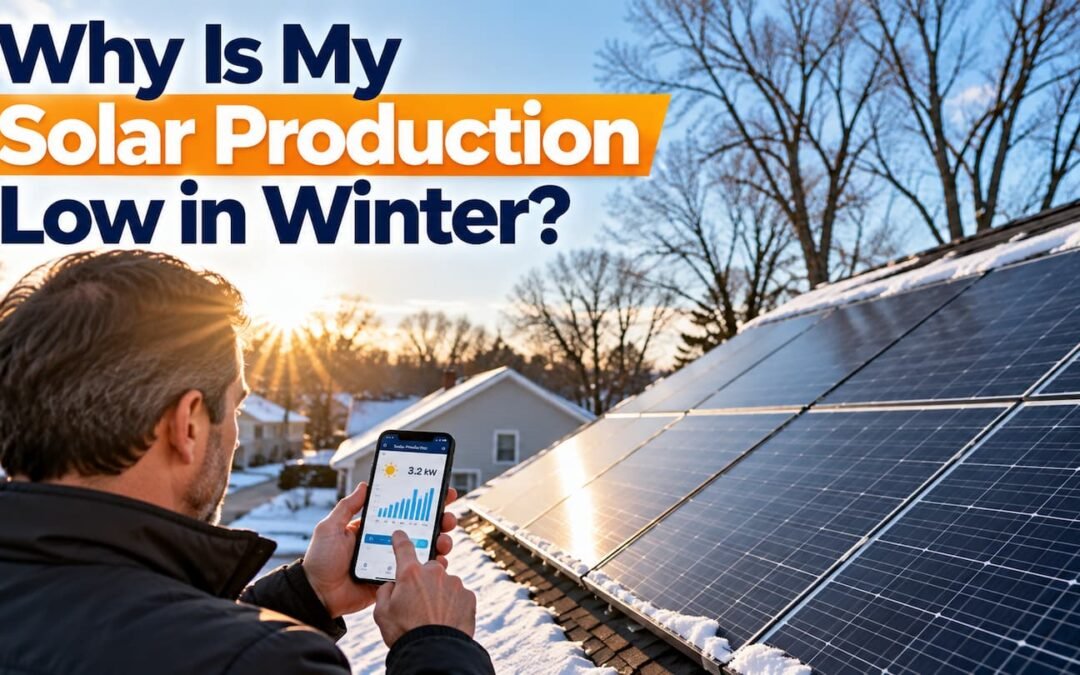
If your monitoring app shows smaller numbers every day from November through February, you are not alone. Low solar production in winter is expected for every rooftop system in New Jersey, but a seasonal dip can also hide a real problem, like an inverter fault or a monitoring gateway that stopped reporting. This guide explains what causes the winter drop, how to tell normal from abnormal, and when it makes sense to have a technician take a look.
Why Low Solar Production in Winter Is Normal
Shorter days mean fewer production hours
Your panels only produce while the sun is up. Around the winter solstice in late December, homes in Monmouth and Ocean Counties get several fewer hours of daylight than in June. Fewer hours of sun simply means fewer kilowatt-hours, even on a perfectly clear day.
The sun sits lower in the sky
The angle of the sun matters as much as the length of the day. According to the U.S. Department of Energy’s Solar Radiation Basics page, the sun’s rays are “far more slanted during the shorter days of the winter months,” and slanted rays travel through more atmosphere, which scatters them. The same page notes that Denver, Colorado, near 40 degrees latitude, receives nearly three times more solar energy in June than in December. New Jersey sits at a similar latitude, so a large gap between your summer and winter totals is not a sign that something is broken.
Shading changes with the season
A low winter sun casts long shadows. A chimney, dormer or neighbor’s roof that never touches your array in July can shade part of it for hours in December. Trees are a mixed picture. Bare deciduous trees, like the oaks and maples common in Wall, Manasquan and Freehold, let more light through once their leaves drop, although trunks and branches still cast shadows. Evergreens like pines, spruces and hollies keep their full shade all year, and with the sun lower they may now block panels they cleared in summer. If a tree has grown since your system was installed, winter is when you will notice it first. Shading is a common source of low solar production in winter.
Snow cover
Panels covered in snow produce little or nothing until the snow slides off or melts. Snow is a temporary cause of low solar production in winter. Tilted panels usually shed snow on their own, as EnergySage explains in its guide to solar panels in winter weather. We covered safe snow removal, and why you should never climb on an icy roof, in our post on snow on solar panels in New Jersey.
Cold weather is not the problem
Many homeowners assume cold temperatures hurt their panels. The opposite is generally true. EnergySage notes that “cold temperatures typically improve solar panel output” and that heat starts reducing output once panel temperature rises above 25°C (77°F). Every panel has a temperature coefficient on its spec sheet that tells you how much output it loses per degree of heat. A cold, clear January afternoon can produce strong output for its length. The issue in winter is the amount of sunlight, not the temperature. In other words, low solar production in winter comes down to sunlight, not cold.
How to Compare Your Production the Right Way
When you see low solar production in winter, comparing a December day to a July day tells you nothing useful. Instead, compare like with like:
- Same month, last year. Open your monitoring app (Enphase, SolarEdge or your installer’s platform) and compare this December to last December. A small difference is usually weather. A large drop with similar weather deserves a closer look.
- Similar days. Compare a clear, snow-free day this week with a clear day from the same week last year.
- Panel by panel. If your system uses microinverters or optimizers, look at the panel-level view. Panels on the same roof face should produce similar amounts. One panel reading zero or far below its neighbors points to equipment or shading, not the season.
- Your utility bill. If monitoring is down, your JCP&L or Atlantic City Electric net metering statements can still show how much energy you sent to the grid month to month.
Keep in mind that winters vary. A snowy, cloudy January will produce less than a dry, sunny one, so a single month is not a verdict. Look for patterns over several weeks. Our article on why solar monitoring is essential explains what your app is telling you and which alerts matter.
Low Solar Production in Winter: Signs It Is a Real Problem, Not the Season
Seasonal low solar production in winter is gradual and affects the whole system evenly. These signs usually point to something that needs repair:
- Zero production on a sunny, snow-free day. Check whether a solar breaker in your electrical panel or an AC disconnect has tripped. If it trips again after a reset, stop and call a professional.
- Inverter error lights or codes. A string inverter showing a red or orange status light, or an error code on its display, needs attention.
- Monitoring shows offline. If the app stopped updating, the cause may be as simple as a new Wi-Fi router or password. It can also mean the gateway or inverter has failed. Without data you cannot see anything else on this list.
- Failed microinverters or optimizers. One or more panels reporting nothing while the rest of the array works is a classic sign of a failed panel-level device.
- Critter damage. Squirrels and birds like the shelter under panels in cold months. Chewed wiring can cut production or create a safety hazard. Our guide to solar panel critter guards in New Jersey covers the warning signs.
- Heavy dirt or debris. Rain rinses most dust away, but leaves, pollen and bird droppings that collect on low-tilt panels or along the frame can stay put. See our tips on solar panel cleaning and maintenance.
- A sudden drop with no change in weather. If production falls sharply from one week to the next under similar skies, something changed on the roof or in the equipment.
For more step-by-step checks you can safely do from the ground, read our solar panel troubleshooting guide for New Jersey.
What You Can Check Yourself, and What to Leave to a Pro
Homeowners can safely look at the monitoring app, check the inverter’s status light, confirm the home Wi-Fi is working, and look at the breaker panel. Those basic checks can help you sort out low solar production in winter before anyone has to visit. Do not open inverter covers, unplug panel connectors, or go on the roof, especially in icy conditions. Solar systems carry DC voltage that stays live whenever light hits the panels, and many winter faults involve wiring that only a trained technician should handle.
When to Call for Solar Diagnostics
Call for a diagnostic visit if low solar production in winter is well below the same month last year with similar weather, if your monitoring has been offline for more than a few days and a router reset did not help, if one or more panels report zero, or if you see an inverter error that returns after a restart. Finding a problem in November is better than discovering in April that your system lost months of output. Solar X technicians serve homeowners across Monmouth, Ocean and Middlesex Counties and beyond, and can test inverters, check panel-level devices, look for critter damage, and restore monitoring.
If panels need to come off for a roof repair, we also handle detach and reset work.
Frequently Asked Questions
How much less do solar panels produce in winter?
With low solar production in winter, the drop depends on your roof direction, tilt, shading and weather. The DOE notes that Denver, at a latitude similar to New Jersey, receives nearly three times more solar energy in June than in December, so a large seasonal gap is normal. Compare against the same month last year rather than against summer.
Do cold temperatures reduce solar panel output?
No. Cold temperatures generally help panel efficiency. Output drops in winter because days are shorter and the sun is lower, not because it is cold.
Why does one panel show much lower production than the others?
Common causes include new shading from an evergreen or chimney, debris, critter damage to wiring, or a failed microinverter or optimizer. If the difference continues on clear days, schedule a diagnostic visit.
My monitoring app says my system is offline. Is it still producing?
Often yes. A monitoring problem can look like low solar production in winter even when the panels are working. Monitoring usually depends on your home internet, so a new router or password can break the connection. Check your utility bill or the inverter status light. If you cannot reconnect it, have a technician check the gateway.
Should I remove snow from my panels to improve winter production?
Never climb on the roof. Tilted panels usually shed snow on their own once the sun comes out. If snow regularly sits on your array, ask about snow guards and safe removal options.
Get Your Winter Solar Production Checked
Not sure whether your low solar production in winter is normal? Solar X LLC can review your monitoring data and inspect your system to find out. Call (732) 992-6323 or visit us at 1775 NJ-34 Ste B4, Wall Township, NJ 07727. You can also request a free estimate online.